
Performance asks a learner to carry attention across time. There is no pause button, so preparation includes continuity, recovery and communication as well as accuracy
29 Sep 2026

An examination samples several forms of musicianship under defined conditions. Depending on the board and syllabus, these may include prepared pieces, technical work, sight-reading, aural skills, improvisation or supporting knowledge
29 Sep 2026
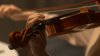
Effective practice is closer to focused problem-solving than repeated performance. A learner listens, identifies one gap, chooses a manageable passage, tries a strategy and checks the result
29 Sep 2026
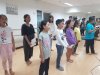
Musical development is multi-dimensional. Accuracy matters, but so do steady pulse, tone, phrasing, listening, memory, reading, coordination and expressive choice
29 Sep 2026

A trial lesson is a short observation window, not an audition. The teacher may explore pulse, pitch matching, imitation, coordination, posture, movement vocabulary or the way the learner responds to a new instruction
29 Sep 2026

Music and dance begin with perception: hearing pitch and pulse, sensing weight and space, and noticing patterns. Technique develops when those perceptions are linked to coordinated action.
29 Sep 2026
